MA Digital Direction Thesis Project
Developed by me from conception to completion, Chai Banao is an interactive project designed to explore South Asian global identity and culture.
About the project
Chai Banao looked to create a methodology of exploring South Asian global culture and identity through a mechanism that bypassed preconceived notions of what “identity” and “culture” are, while incorporating ethical, community based research methodologies.
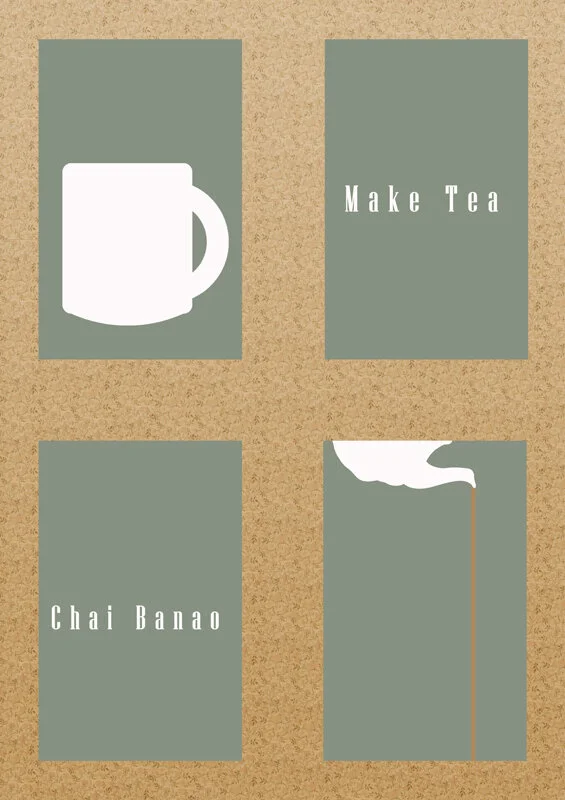
Poster by Ayza Akhtar
While I developed this project from concept through realization, there is an important participatory component in the actual content of the work which involved me communicating with members of the global South Asian community
Project Tools
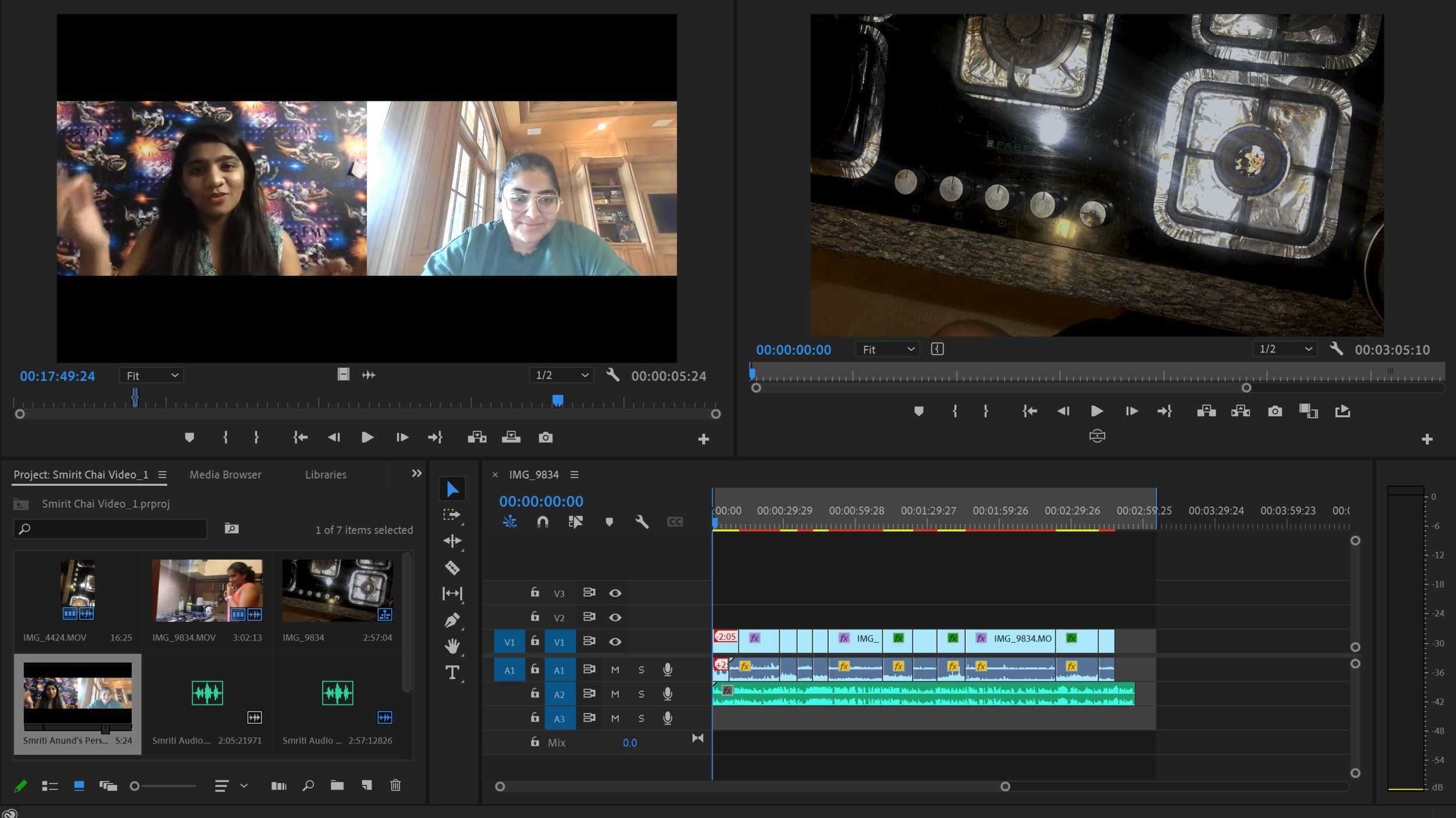
The project uses Twine, an interactive, text based platform. It is hosted on itch.io, an platform for independent games. Combined with that is an ongoing audio/video archive of South Asians talking about and making chai which is hosted on Instagram, with audio from interviews with the participants edited in Reaper, and video edited and captioned in Adobe Premiere Pro.

Twine page with embedded audio
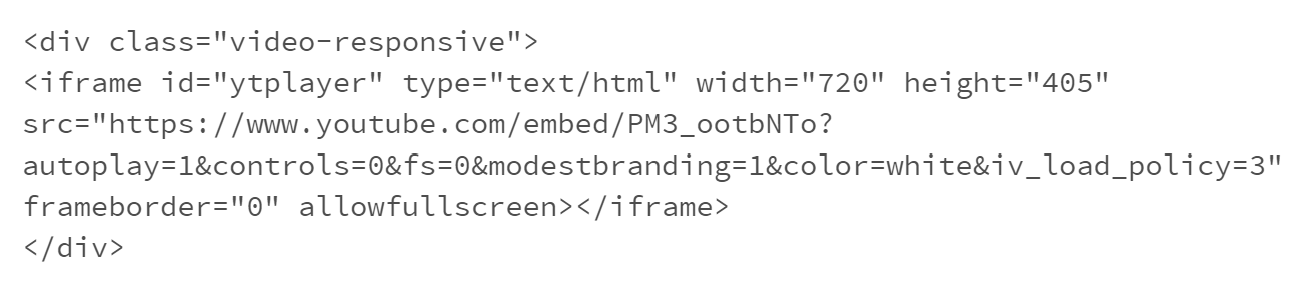
Twine HTML sample
Whatever it is, the way you tell your story online can make all the difference.
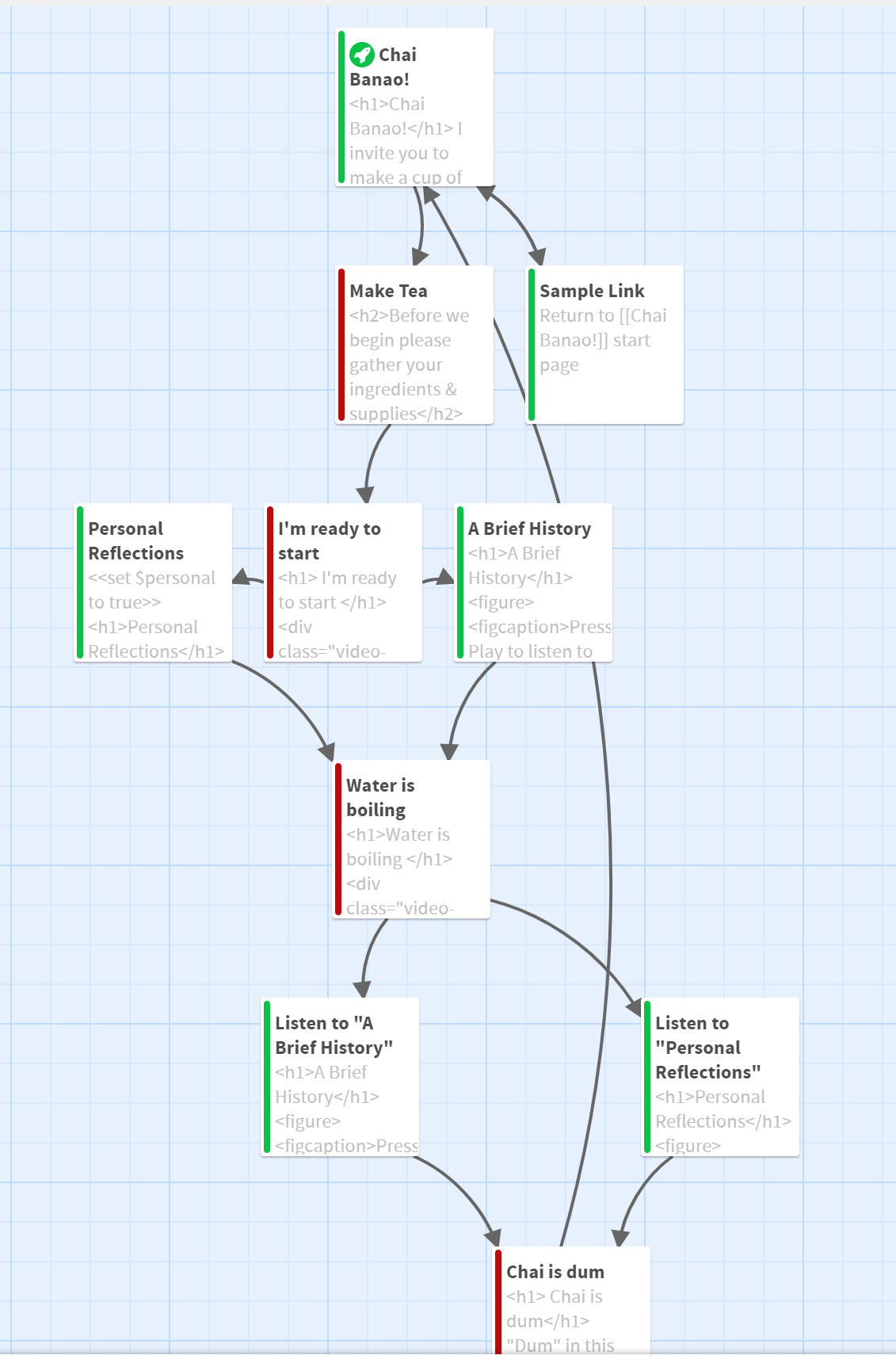
Twine Framework
Project Discovery
Conceptually this project depended on learning a new practice and approach to research. To that end, I explored a variety of ethnographies, phenomenologies and methodologies before creating a hybrid of what resonated with me. This was codified into the ethical and methodological framework I used to proceed with the project.
I based my ethical approach on an interpretation of indigenous storywork methodologies as highlighted by Jo-Ann Archibald in her text “Decolonizing Research: Indigenous Storywork as Methodology” I combined this with concepts of standpoint epistemology and testimonial authority as defined by Patricia Hill Collins in her text “Intersectionality.” Between these two theorists I found an ethical and conceptual basis to my research which informed my methodology.
One of the key points of the project was to get people to talk about culture and identity without being caught up on what those things are. I decided to leverage David Sutton’s ideas of synaesthetic memory encoding of food and Maurice Halbwach’s ideas on collective memory. Their combined theories point to an idea that food (or in this case, chai) can bring forth memories influenced by the special and material world that we interact with. When people started sharing their memories of chai it inevitably led them to sharing stories that revealed unexpected aspects of global South Asian culture and identity. This became even clearer when multiple stories were placed in concert with each other, revealing connections and frictions that spanned generations and geographies.
Final Outcome
The Instagram account is posted with videos of people sharing their chai stories and making chai. I have been contacted by people who are not part of my immediate community who want to participate in the project, which to me is a sign of success. I hope to continue to grow the community and add more videos over time. Additionally, several of the people who were asked to give feedback on the project prior to publishing shared their own chai memories instead of sharing feedback, which I took as a win.